p53 isoform functions in physiology and disease: examples in brain, cancer and ageing
P53 isoform functions in physiology and disease: examples in brain, cancer and ageing




Anfitriões
Filipe Valente Duarte
Data & Hora
Setembro 12, 11:00-12:00h
Local
Auditório CNC 2.º piso
Registo
Não obrigatório
Quando?
Tuesday, September 12, 2023, 11 am
O quê?
p53 isoform functions in physiology and disease: examples in brain, cancer and ageing
Quem?
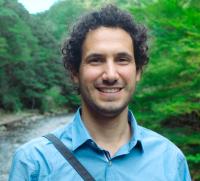
Marco M. Candeias, Molecular and RNA Cancer Unit, Graduate School of Medicine, Kyoto University (Japan); Department of Human Genetics, National Institute of Health Doutor Ricardo Jorge, Lisbon Portugal; BioISI–Biosystems & Integrative Sciences Institute, Faculty of Sciences, University of Lisbon, Portugal
Onde?
Auditório CNC 2.º piso
Anfitrião?
Filipe Valente Duarte
Bio: Marco has focused most of his research on p53 isoforms and p53 mRNA. He discovered the non-coding regulatory functions of p53 mRNA, which was one of the first examples of a bifunctional RNA; and discovered two internal ribosome entry sites (IRES) in p53 mRNA; and characterized the regulation and function of the first and second most conserved short isoforms of p53, Delta160p53 (D160p53) and Delta40p53 (D40p53). Importantly, Marco discovered that p53 is a natural proto-oncogene, solving the 30 year-long mystery of why a tumour suppressor would turn into an oncogene when mutated. Marco also discovered the shortest p53 isoform, Delta246p53 (D246p53), that seems to affect organismal ageing.
Mais informação aqui.